
Why Retail Properties Need Routine Parking Lot Sealcoating
Protecting Your Investment in High-Traffic Commercial Lots
The act of sealcoating is a protective process that shields retail parking lots from constant wear caused by vehicles, foot traffic, oil spills, and exposure to the elements.
Regular asphalt sealcoating forms a cohesive, water-resistant barrier that prevents oxidation, cracking, and moisture penetration, extending the lifespan of your asphalt and reducing long-term maintenance costs.
Increased Curb Appeal for Storefront Visibility
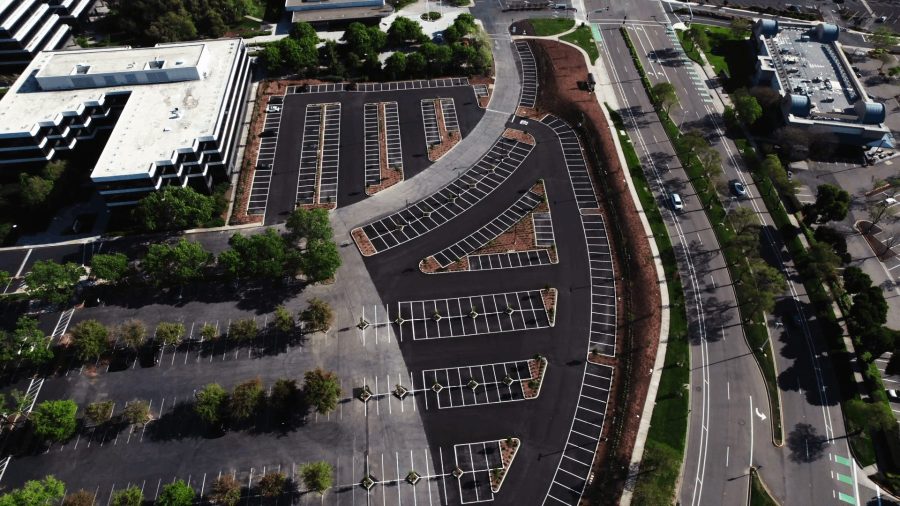
A freshly sealed parking lot creates a clean, deep-black surface that enhances the overall appearance of your property. This visual improvement can make your storefront more inviting to customers and reinforce a sense of professionalism and maintenance quality.
Safety, Liability Reduction, and ADA Compliance
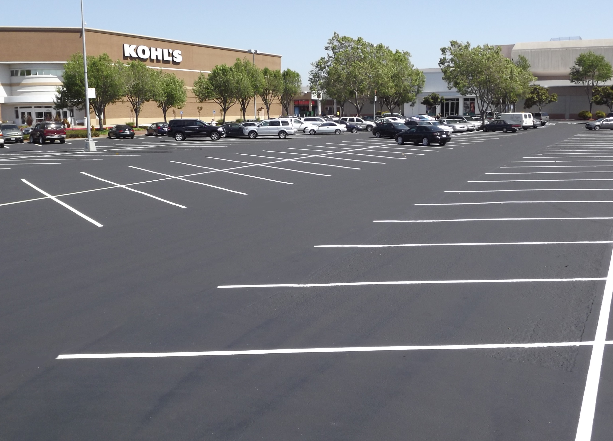
Sealcoating improves surface visibility and enables clear, compliant striping for accessible parking, crosswalks, and directional flow. Maintaining a smooth, well-marked surface reduces trip hazards and vehicle damage, lowering the risk of injury and liability claims on your property.
What Happens When You Skip a Seal Coat on your Asphalt Parking Lot
Cracking, Fading, Raveling, and Accelerated Wear
Without a protective sealcoat, asphalt begins to degrade from UV exposure, water infiltration, and chemical spills. This results in surface cracks, faded color, and a roughening of the surface called raveling, accelerating the breakdown of your parking lot surface and increasing the frequency of costly repairs. Cracks and holes allow water to intrude beneath the surface, which can cause further damage to the pavement and foundation, eventually leading to more potholes and structural failures.
Customer Experience and Brand Perception Impact
A neglected parking lot with visible damage or faded striping reflects poorly on your business. Customers associate poorly maintained exteriors with lower quality service, which can impact foot traffic, tenant satisfaction, and your brand’s reputation.
Unexpected Repair and Repaving Costs
Failing to seal coat a parking lot regularly leads to premature surface failure and structural issues that require full-depth patching or repaving. These major repairs cost significantly more than routine sealcoating and may require full lot closures that disrupt business operations. In many cases, large areas must be blocked off to ensure safety and allow repairs to be completed without interference.
How Often Should You Reseal a Parking Lot?
General Frequency: Every 2-5 Years Depending on Traffic
Most commercial parking lots benefit from resealing every two to three years. On average, this interval allows property owners to plan maintenance schedules and budgets more effectively. High-traffic retail lots may require more frequent sealcoating due to the constant stress from vehicle loads, turning patterns, and surface contaminants.
Regional Climate Considerations (Northern California-Specific)
In Northern California, asphalt is exposed to intense sun, heat cycles, and seasonal rain, all of which accelerate deterioration. Sealing asphalt parking lots in the Bay Area and Central Valley protects against UV oxidation and water damage, both of which shorten pavement life without routine maintenance. At Dryco, we use a specific seal coat blend design for Northern California’s climate.
Surface Condition and Prep Needs Before Reapplication
Before resealing, it’s critical to assess the surface for cracks, stains, and debris. The top layer of asphalt should be thoroughly cleaned to ensure proper adhesion of the new sealcoat layer and to prevent future cracking and oxidation. Larger cracks but not too large must be filled with hot-applied material. Prior to the main sealcoating process, make sure all necessary repairs and cleaning are completed. Prepare the area by blocking off the designated zone and turning off sprinklers to ensure proper application and drying.
Rough parking lots may require the addition of sand to the sealer mix to help fill small voids, adding sand requires the addition of a bonding agent like latex to ensure the aggregate stays in the mix. Smooth surfaces may elect for an aggregate free mix so that the smooth finish is retained. Another options for the more climate friendly consumer would be a cool pavement solution. While still providing life extension to your pavement. Cool pavement solutions reduce the heat island effect by coating asphalt with solar reflective sealants. This product improves comfort and health, air quality, slows climate change, and can decrease energy consumption.
Choosing the Right Application Method for Your Retail Lot
As a business owner, the condition of your asphalt parking lot is a direct reflection of your property’s professionalism and commitment to safety. Choosing the right pavement sealer is a critical step in protecting your asphalt pavement from daily wear, harsh weather, and the constant flow of traffic. The right sealer not only enhances the appearance of your parking lot but also extends its durability, helping you avoid costly repairs and maintain a welcoming environment for customers. When selecting a pavement sealer, consider several factors, including the volume of vehicles your lot supports, the local climate, and the current state of your asphalt. By making an informed choice, you can ensure your parking lot remains protected, attractive, and functional for years to come.
Pavement Sealer Application Methods
Pavement sealers can be applied three ways: via squeegee, sprayer, or hand. Each method provides distinct advantages and disadvantages. The squeegee method forces the material into rough spots and cracks allowing for deep penetration, however, it leaves a streaky texture as the product wears, and second coats are often wasted as the material is pulled off of the top. The spray method lays a uniform coat that wears evenly, however, it does not fill in cracks and level rough spots as effectively as the squeegee method. Placing the material by hand gives installers the ability to get into tight corners and around obstructions like wheel stops without making a mess, however, it is the most time consuming and streaky of all. DRYCO uses all three methods to get our customers the best of all worlds. We start with the hand method to make sure we can cleanly trim around curbs, wheel stops, concrete ramps, and other obstructions. Then we squeegee the lot to ensure we get proper penetration into the rough areas and cracks. Finally, we finish with a spray coat to ensure that a generous amount of material is placed, and that the product wears off uniformly
Matching Sealer to Traffic and Environmental Needs
Selecting the right pavement sealer for your asphalt parking lot means taking into account the unique demands of your property. Pavement sealers can be applied three ways: via squeegee, sprayer, or hand. Each method provides distinct advantages and disadvantages. The squeegee method forces the material into rough spots and cracks allowing for deep penetration, however, it leaves a streaky texture as the product wears, and second coats are often wasted as the material is pulled off of the top. The spray method lays a uniform coat that wears evenly, however, it does not fill in cracks and level rough spots as effectively as the squeegee method. Placing the material by hand give installers the ability to get into tight corners and around obstructions like wheel stops without making a mess, however, it is the most time consuming and streaky of all. DRYCO uses all three methods to get our customers the best of all worlds. We start with the hand method to make sure we can cleanly trim around curbs, wheels stops, concrete ramps, and other obstructions. Then we squeegee the lot to ensure we get proper penetration into the rough areas and cracks. Finally, we finish with a spray coat to ensure that a generous amount of material is placed, and that the product wears off uniformly
It’s also important to address any existing cracks or surface damage with proper crack filling before applying a new seal coat. This ensures the sealer adheres properly and provides maximum protection. Consulting with an experienced contractor can help you evaluate these factors and select the best sealer for your needs. Regular maintenance, including timely seal coating and crack repair, will not only extend the life of your asphalt pavement but also preserve the safety and appearance of your parking lot, keeping your property in top condition for customers and tenants alike.
Planning Ahead: The Cost Benefits of Scheduled Sealcoating
Avoiding Emergency Repairs and Business Disruption
Emergency asphalt repairs are costly, reactive, and often require sudden closures that disrupt retail operations. Scheduled parking lot sealcoating prevents these issues by reinforcing surface integrity and allowing maintenance to be completed during controlled, low-impact windows.
Bundling Sealcoating with Striping and Minor Repairs
Planning sealcoating in advance allows you to bundle services like restriping, crack filling, and signage updates. This bundled approach reduces overall project costs, limits multiple mobilizations, and ensures your parking lot remains compliant and clearly marked.
Seasonal Scheduling and Contractor Availability
Sealcoat demand spikes during peak months, which can limit contractor availability and increase costs. Scheduling early secures preferred dates, particularly in California’s dry season, and gives your team time to communicate with vendors and customers before work begins.
Retail Sealcoating Timeline: How to Minimize Disruption
Weekend or Holiday Work Windows
Retail centers often benefit from scheduling sealcoat projects during weekends, holidays, or off-hours when foot and vehicle traffic is lowest. This minimizes customer inconvenience and allows full coverage without impacting business operations.
Phased Access and Signage for Customers
Divide the lot into manageable sections and implement clear signage to direct traffic during each phase. This approach ensures continuous access to your property and maintains safety while work is in progress.
Coordination with Property Managers and Tenants
Effective communication with tenants and property managers is essential for a smooth sealcoating process. Provide advance notice, access instructions, and expected cure times to reduce confusion and ensure compliance throughout the job.
Use a Sealcoating Calculator to Estimate Your Project Scope
How to Measure SF and Factor in Striping
To estimate your sealcoating needs, start by measuring the total square footage of your lot (length × width for each section). Don’t forget to factor in striping, as complex layouts, crosswalks, and stencils can increase costs by 25 to 30 percent depending on scope.
Budget Planning Using DRYCO’s Calculator Tool
DRYCO’s Sealcoat Calculator gives retail property owners a fast, reliable way to estimate project costs by size, condition, and service add-ons. It helps you plan capital budgets more accurately and avoid the guesswork that leads to underfunded maintenance.
When to Move from Estimate to Site Evaluation
Once you’ve calculated a budget range using the tool, the next step is scheduling a site visit. A DRYCO estimator can assess surface condition, access points, and repair needs to generate a final quote tailored to your retail lot’s exact specifications.
For the best results, discuss your project with a professional estimator to receive advice tailored to your specific needs.
Final Considerations Before You Seal Your Retail Lot
Check Weather and Curing Timelines
Sealcoating should only be performed during dry, warm conditions to ensure proper curing. Retail lots typically require 24 to 48 hours before reopening to traffic, and failure to plan around weather can delay access or damage the surface.
Communicate Clearly with Tenants and Vendors
Send advance notice to tenants, delivery services, and any regular vendors operating at your property. Include closure dates, alternative access routes, and expected reopen times to avoid confusion or business disruption.
Document All Work for CAM Accounting and Records
Keep detailed records of all sealcoating work for Common Area Maintenance (CAM) reporting. Include invoices, scope of work, before/after photos, and contractor contact details to support transparency and cost recovery.
Get a Fast Estimate for Your Retail Property
Use the DRYCO Sealcoat Calculator to receive an instant estimate based on your lot’s square footage and service needs, be sure to complete the online form to get your results. For precise pricing and scheduling, contact our estimating team to set up a no-obligation site evaluation.
Frequently Asked Questions
How often should I sealcoat a retail parking lot?
Retail parking lots should be sealcoated every 2 to 3 years, depending on traffic volume and exposure to weather. High-traffic commercial lots may need more frequent maintenance to prevent surface breakdown.
Can I keep part of my parking lot open during sealcoating?
Yes. Most retail sealcoating projects are completed in phases to allow sections of the lot to remain open. This minimizes disruption and maintains access for customers and deliveries.
Does sealcoating fix cracks or potholes?
No. Sealcoating does not repair structural damage. Cracks must be filled and potholes repaired before the sealcoat is applied to ensure proper adhesion and long-term performance.
How long before customers can drive or park on the sealed surface?
Allowing 30 days is optimal for the sealcoat to cure fully depending on temperature, humidity, and sun exposure. Early access can damage the surface and reduce the sealcoat’s effectiveness. Especially in HOA and tight turn areas, the new seal coat will scuff for about 30 days or so and for this reason we recommend avoiding direct contact with the sealed surface to minimize any potential scuffing.
How do I estimate the cost of sealing my parking lot?
Use DRYCO’s Sealcoat Calculator to input your square footage and determine an estimated cost. For a final quote, schedule a professional site evaluation with our team.