
Sealcoating is one of the most cost-effective ways to protect asphalt and extend its lifespan, especially in a demanding climate like California. Homeowners, property managers, and facility owners often ask how much does sealcoating cost, but the answer depends on several variables. From climate exposure to surface condition such as texture, cracks, cleaning, access, mobilizations and other individual conditions as well as project size will affect pricing. Understanding how these variables affect pricing helps you plan smarter and avoid unnecessary expenses.
This guide breaks down sealcoating costs clearly, explains what influences pricing, and helps you decide how to budget effectively for your asphalt surfaces.
Plan Your Sealcoating Investment With Confidence
Protect your asphalt and avoid costly repairs with a clear, professional sealcoating plan. Get expert guidance and pricing tailored to your property and California conditions.
Cost Per Square Foot: What That Number Includes
When contractors price sealcoating per square foot, the figure usually includes surface cleaning, minor prep work, surface condition, surface cracks, surrounding conditions and application of the seal coating. However, the total price also depends on how many square feet the area covers and also whether a minimum fee applies for smaller jobs. Additionally, each project phase can be broken down to individual phases if needed.
Larger areas benefit from economies of scale, meaning the square footage directly impacts the final rate. Understanding your total square footage is essential for receiving an accurate estimate.
Cost Per Square Foot: What You’re Really Paying For
In most professional commercial projects, sealcoating is priced on a per-square-foot basis, but the effective rate typically decreases as project size increases due to production efficiency and mobilization costs. In general, pricing tends to follow a volume-based structure, where smaller lots carry a higher per-square-foot cost, while large-scale parking areas and commercial properties benefit from lower rates. This pricing generally accounts for surface cleaning, standard preparation, crack treatment, material application, and labor, with additional services such as crack repairs, handwork, striping, and curb markings quoted separately.
For example, a 1,000 square foot section of asphalt may fall in the range of approximately $1,200 to $1,300, while a 30,000 square foot commercial parking area may be priced closer to $9,000 to $10,000, depending on surface condition, layout complexity, and site access. These figures assume the asphalt surface is in serviceable condition and does not require extensive structural repairs or specialty coatings.
For a quick and personalized estimate based on your property size and service needs, use our sealcoating calculator to see how pricing may apply to your asphalt surface.
Labor Costs and Their Impact on Pricing
Labor costs play a major role in sealcoating pricing. Proper application requires trained crews who understand asphalt behavior, weather conditions, and curing times. In California, labor standards and safety compliance also affect pricing.
A professional team ensures the driveway is sealed in a timely manner, reducing downtime and preventing application errors that could lead to frequent repairs later on.
Material Costs: What’s in the Sealant?
Material costs vary based on the type of sealcoating materials used. Common options include sealants and asphalt emulsion, each offering different performance benefits, while asphalt-based sealers are often lower in volatile organic compounds.
High-quality asphalt sealant and asphalt sealer products form a protective barrier against moisture, chemicals, and uv rays, which are especially intense in California.
One Coat vs. Two Coats: Is More Always Better?
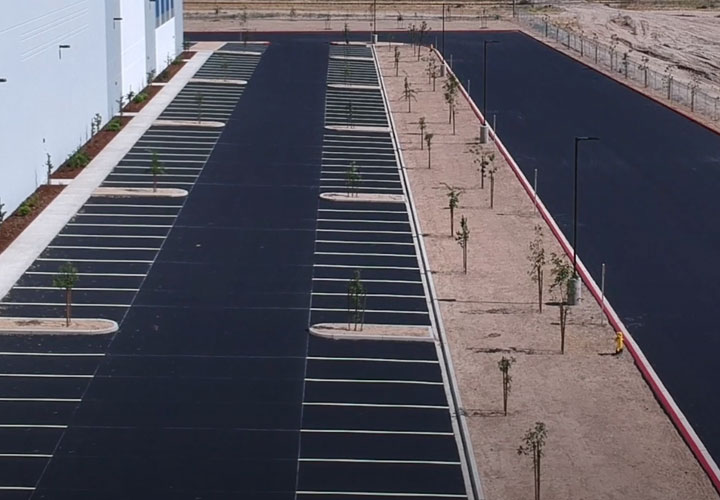
In many professional commercial applications, a two-coat system is the standard approach rather than an upgrade. The first coat is typically applied by hand using a squeegee to work the sealant into the surface, filling minor voids and ensuring strong adhesion. The second coat is then sprayed on to create a smooth, uniform finish and consistent coverage across the entire area.
While a two-coat process represents a higher upfront investment than a single application, it generally delivers greater durability, improved appearance, and longer service life, helping reduce the likelihood of premature wear and the need for early repairs, particularly in high-traffic or commercial environments. The cost difference between one coat and two is smaller than most property managers expect. Because the surface preparation, crack filling, traffic control, and area closures are already completed during the first coat, the second coat is primarily a material application step. As a general rule of thumb, the second coat adds roughly 33% more cost while delivering approximately 50% more service life, making it one of the strongest returns on investment available in routine pavement maintenance.
Surface Preparation and Crack Sealing
Proper preparation is one of the most important key cost factors. This includes cleaning with brooms and blowers, removing oil stains, and addressing small cracks before sealing.
More extensive prep, such as crack sealing, crack filling, or filling cracks caused by deep cracks or crushed stone exposure, increases the cost involved but prevents structural damage. These cracks are cleaned with compressed air and hot crack filler is placed in the cracks. Crack treatment is applied to all cracks ¼” and larger up to 1” in width. After 1” it can be applied but alternative methods should be discussed.
Key Factors That Influence Sealcoating Costs
Sealcoating costs can vary widely from one project to another because no two asphalt surfaces are exactly the same. The final price depends on a combination of surface conditions, project size, materials, and site logistics. Understanding these factors helps property owners plan ahead and avoid unexpected expenses.
The most common factors that influence sealcoating costs include:
Total square footage
Larger areas typically receive a lower cost per square foot, while smaller projects may include minimum service or mobilization fees for equipment setup and material preparation.
Surface cleanliness and preparation
Excess dirt, landscaping debris, tracked soil, or oil residue increases the amount of cleaning and prep work required before sealant can be applied, raising labor time and cost.
Condition of the asphalt
Cracks, oxidation, surface wear, or damaged areas may require patching or crack filling to ensure proper adhesion and long-term performance.
Handwork and protection of detailed areas
Features such as valley gutters, decorative or stamped concrete entries, curbs, and sensitive edges often require manual application, masking, or taping to prevent tracking or overspray, adding time-intensive labor.
Striping, markings, and traffic features
Line striping, speed bumps, stenciled symbols, crosswalks, and curb painting require additional materials and labor after sealing, increasing the overall project cost. Especially if line striping layout is to change, then black paint should be applied to any changing pavement markings to prevent ghosting back through the new seal coat.
Number of coats applied
Some surfaces only require one coat (though not recommended), while high-traffic or commercial areas often need two coats for enhanced durability and appearance.
Type and quality of sealcoating materials
Higher-grade sealants and additives cost more upfront but provide better resistance to UV exposure, oil drips, and weather-related wear. DRYCO uses a product that exceeds expectations for our customer needs over years.
Site layout and access complexity
Tight entry points, irregular layouts, or the need to protect adjacent concrete, landscaping, or pedestrian areas can slow production and increase labor demands.
Residential vs. commercial use
Parking lots, shopping centers, and high-traffic properties typically require more coordination, masking, and post-seal striping than standard residential driveways.
Why Sealcoating Saves Money Long-Term
Sealcoating protects asphalt pavement from oxidation, water intrusion, and chemical damage. Without it, surfaces deteriorate faster, leading to asphalt resurfacing or full replacement.
Routine asphalt sealing and regular maintenance significantly reduce long-term expenses and help property owners save money by avoiding premature failures.
Choosing the Right Sealcoating Contractor in California
Choosing the right sealcoating contractor means looking beyond price alone. Experience with California’s climate, proper surface preparation, use of quality materials, and clear communication all play a critical role in how long the sealcoating will last. A reliable contractor should understand local conditions, follow best practices, and provide a transparent scope of work with realistic expectations. A contractor that will spray the seal coat ensures you get the material you paid for on the ground.
DRYCO is a trusted provider across California because of its consistent focus on durability, performance, and workmanship. With proven experience on residential and commercial projects, DRYCO delivers sealcoating solutions designed to protect asphalt and extend pavement life. To see the quality of their work, visit the DRYCO project gallery and explore real examples of completed sealcoating and paving projects.
Final Thoughts: Is Sealcoating Worth the Cost?
When done correctly, sealcoating is one of the most cost effective ways to protect asphalt surfaces. Whether it’s a driveway or a parking lot sealcoating project, the investment pays off by extending pavement life and reducing future maintenance.
When paired with quality products, experienced contractors, and proactive maintenance, sealcoating delivers strong value per square foot while protecting your property for years to come.
Get the Most Value From Your Asphalt
Sealcoating is a smart investment when it’s done right. From accurate pricing to quality materials and professional application, the right approach can extend the life of your asphalt and reduce long-term maintenance costs. Let experienced professionals evaluate your surface and recommend the best solution.
FAQ about Asphalt Sealcoating in California
In California, professional sealcoating is typically priced on a volume-based, per-square-foot structure, where the effective rate decreases as project size increases. Smaller areas often carry a higher per-square-foot cost due to mobilization and setup requirements, while large commercial parking lots and multi-tenant properties benefit from lower rates. Final pricing is influenced by surface condition, preparation needs, handwork, striping, and site layout. Use our sealcoating calculator to see how pricing may apply to your specific asphalt surface and project size.
Yes, driveway sealcoating is typically less expensive than parking lot sealcoating because residential driveways are smaller and require less coordination. Commercial parking lots often involve traffic control, additional surface preparation, and more labor time.
The condition of the asphalt surface plays a major role in determining sealcoating costs. Surfaces with cracks, oil stains, or surface wear require additional preparation, such as crack sealing or cleaning, which increases the total cost but improves long-term performance.
An accurate estimate requires measuring the total square footage and evaluating the asphalt surface condition. Working with an experienced sealcoating contractor ensures proper assessment, transparent pricing, and recommendations tailored to California conditions.
Sealcoating is one of the most cost effective ways to protect asphalt pavement and extend its lifespan. Regular asphalt sealing helps prevent oxidation and damage, reducing the need for asphalt resurfacing or frequent repairs. To get an accurate recommendation for your property, schedule a free estimate with our team and have your asphalt evaluated by experienced professionals.